
STORE INFO
Location & Store Hoursmy cart
Secure checkout
You're looking at a CBD product. The label says "all-natural." There's a leaf on it, it has earthy tones, and it looks really clean and trustworthy.
But is it?
Sadly, "all-natural" isn't a regulated term in the CBD industry. Anyone can print it on a bottle.
Knowing how to read CBD labels means looking past the marketing language and straight at the facts.
The FDA hasn't established a formal standard for the term “all-natural” in the CBD industry. So when you see it on CBD labels, it’s not always rooted in facts.
That doesn't mean every brand using it is being deceptive, but the phrase alone tells you nothing about how the hemp was grown, how the CBD was extracted, or what else is in the bottle.
Hemp is a bioaccumulator. It absorbs things from soil, including pesticides and heavy metals. So, the growing environment is no small thing because what is in the ground ends up in the final product.
So, to find a truly clean CBD product, you have to look at the sourcing, the extraction method, the ingredient list, and the third-party lab results.
These two terms get used interchangeably, and they absolutely should not be.
Organic (when certified by the USDA) means the hemp was grown without synthetic pesticides, herbicides, or fertilizers, and the farming practices meet a specific standard of environmental stewardship. That's a real, verified claim backed by a third-party certifier.
All-natural means... something different to every company.
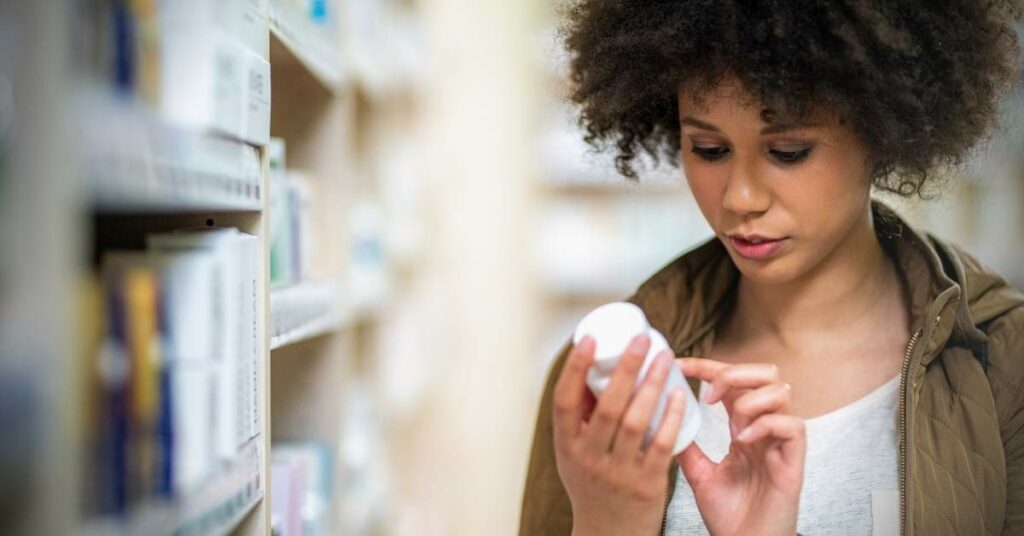
The label is your primary source of information. Here’s how to read a CBD label, section by section:
This tells you how much product you're getting. For tinctures, it's in milliliters; for gummies and edibles, it's in grams or a unit count. This is the number you need to know when you want to calculate the cost per dose.
The total CBD content is the amount of CBD in the entire product. The CBD per serving is what you actually get in one dose. These are two very different numbers, and some brands make them easy to confuse on purpose.
Always find both numbers. If only one is listed, do the math yourself.
CBD product labels should tell you whether the product uses full-spectrum, broad-spectrum, or isolate CBD.
| Type | What it Contains |
| Full-Spectrum | All cannabinoids, terpenes, and up to 0.3% THC |
| Broad-Spectrum | Multiple cannabinoids and terpenes, no THC |
| Isolate | Pure CBD only |
Full-spectrum products deliver what's known as the entourage effect. It’s the idea that cannabinoids and terpenes work better together than in isolation. If you want maximum effect and aren't concerned about trace THC, full-spectrum is the one you want.
The ingredient list on a CBD label tells you what's actually in the product beyond the CBD itself.
Pay attention to:
A clean product has a short, readable ingredient list. If the CBD label looks like a chemistry textbook, it’s probably not what you’re looking for.
A Certificate of Analysis (COA) is a report from an independent, third-party lab that confirms what's actually in the product.
A proper COA has:
Look for a QR code on the packaging that links directly to the report, and remember:
No COA, no purchase.
Surprised? When you think about it, it makes sense.
CBD product labels don't always include the extraction method, but it's one of the biggest factors in product quality, and it has everything to do with how "natural" the resulting product is:
White-labeling is common in the CBD industry, which means a brand may buy a pre-made formula from a manufacturer and sell it under their name. Check the label or website for the manufacturer’s name, address, and production standards.
Look for brands that follow safety and quality standards, such as:
These result from a facility undergoing a real verification process.
At South Tip, we believe every step of production should be something you are proud of.
Our production facility is cGMP-certified, and every batch undergoes third-party testing, with results publicly available.
We hold ourselves to the highest possible standards, and we believe that is reflected in our products. Try some of them for yourself!
So what does a genuinely clean CBD product look like, from top to bottom?
It starts in the ground. Hemp grown in quality soil, with thoughtful farming practices. It continues through extraction, CO2 or clean ethanol, with no harsh residual solvents.
It then moves through production in a certified facility with food-safety standards in place. It gets tested by an independent lab at the batch level. And it arrives in your hands with a label that has a short ingredient list, that doesn't include artificial components.
That's what "all-natural" really looks like.
